
Table of Contents
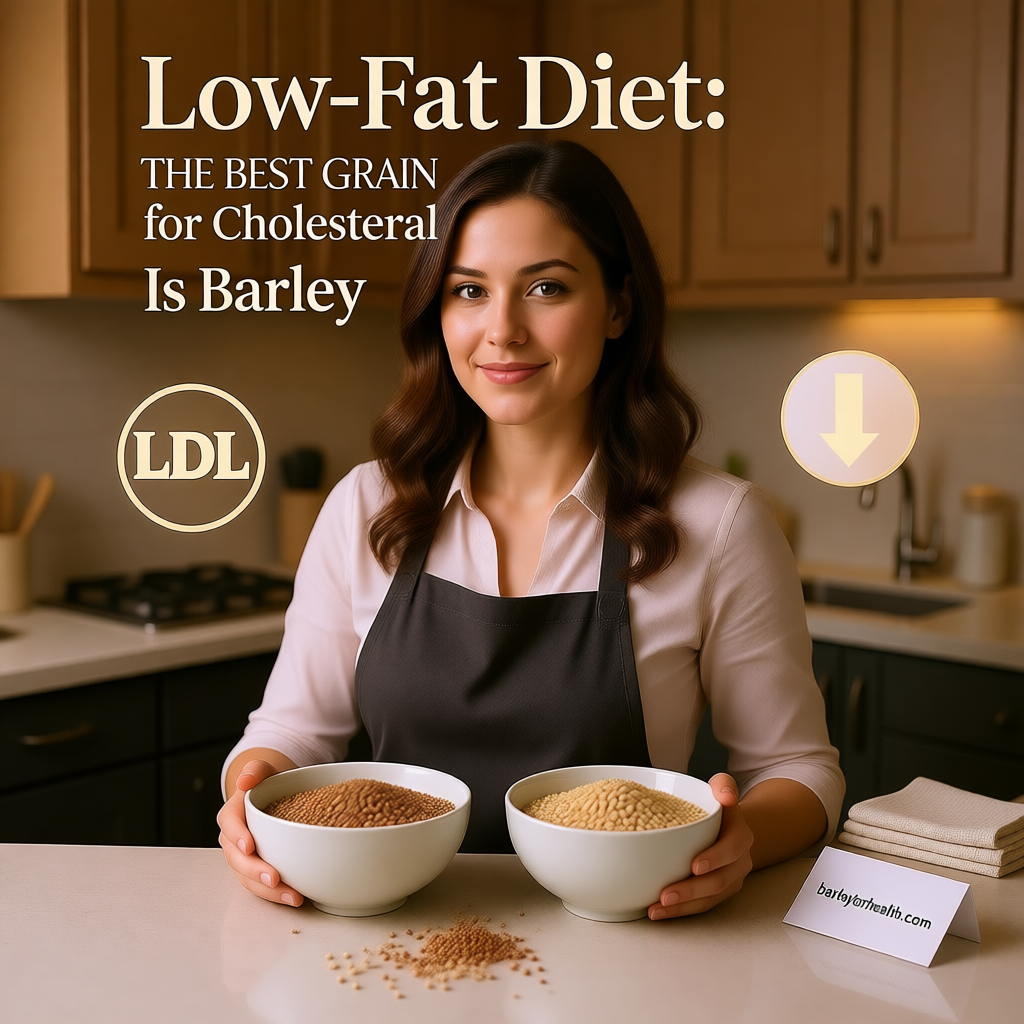
Barley is one of the most effective grains for lowering LDL cholesterol—especially within a low fat diet. Naturally low in fat and exceptionally rich in beta-glucan, barley has been extensively studied in clinical trials and repeatedly shown to improve lipid profiles, reduce LDL levels, and support long-term heart health.
This article synthesizes the strongest scientific evidence from multiple randomized controlled trials (RCTs) and meta-analyses involving more than 1,300 participants. All data presented here comes directly from peer-reviewed publications cited at the end of the article.
Whether you’re aiming to follow a low fat diet, reduce cholesterol, or support cardiovascular health naturally, barley stands out as the best grain choice supported by science.
Why Low Fat Diets Benefit From High-Fiber Grains Like Barley
A low fat diet reduces total and saturated fat intake to protect cardiovascular health and lower the risk of atherosclerosis. However, decades of clinical research show that reducing dietary fat alone is not always enough to significantly lower LDL cholesterol. To be truly effective, a low-fat diet must focus not only on what is removed (fat) but also on what is added—specifically, foods that actively improve lipid metabolism.
The most effective low-fat diets include:
- Low-fat, nutrient-dense foods that provide vitamins, minerals, and antioxidants without adding excess calories or saturated fats.
- High soluble fiber, especially beta-glucan, which forms a viscous gel in the gut and helps reduce cholesterol absorption.
- Slow-digesting carbohydrates that stabilize blood sugar and prevent metabolic spikes that can influence lipid synthesis.
- Whole grains that promote cholesterol excretion, enhance bile acid turnover, and support a healthier lipid profile.
Among all grains, barley fits this pattern more effectively than most. It is naturally very low in fat, exceptionally high in soluble beta-glucan, and has been repeatedly shown in randomized controlled trials to reduce LDL cholesterol, improve total cholesterol, and support overall cardiovascular health. This makes barley not just compatible with a low-fat diet—but one of its most powerful allies.
Scientific Evidence: How Barley Lowers Cholesterol and Triglycerides
Barley’s cardiovascular benefits are among the most extensively documented in cereal and nutrition science. Few grains have been studied as rigorously—or as consistently—as barley when it comes to improving lipid profiles and reducing cardiovascular risk. Across decades of research, including controlled clinical trials, crossover interventions, and large-scale meta-analyses, barley repeatedly demonstrates a clear and measurable ability to lower LDL cholesterol, improve total cholesterol balance, and in some cases reduce triglycerides.
What makes barley particularly compelling is that its effects are observed in diverse populations—from hypercholesterolemic adults to individuals at moderate cardiovascular risk—and across a variety of food forms, including whole barley, barley flour, barley porridge, barley bread, and purified beta-glucan extracts. This consistency across study designs further strengthens the scientific consensus surrounding barley’s role in heart health.
Moreover, barley’s lipid-lowering effects are not theoretical. They are supported by:
- Biochemical mechanisms, such as beta-glucan’s ability to bind bile acids and reduce cholesterol absorption.
- Clinical outcomes, showing significant reductions in LDL cholesterol within just a few weeks.
- Comparative trials, where barley outperforms grains like wheat thanks to its superior soluble fiber profile.
- Regulatory validation, including FDA approval for barley beta-glucan as a cholesterol-lowering dietary fiber.
Below is a synthesis of the most influential and rigorously conducted clinical studies that confirm barley’s impact on cholesterol and triglycerides.
1. Talati et al. (2009 / 2011): Meta-Analysis Confirms Barley’s LDL-Lowering Effect
This meta-analysis included 8 randomized controlled trials with 391 participants over 4–12 weeks. Participants had high cholesterol or were at increased cardiovascular risk.
Baseline Lipid Profile
Participants commonly had:
- elevated total cholesterol
- high LDL cholesterol
- triglycerides above optimal ranges
Health Improvements After Barley Consumption
Results demonstrated significant lipid improvements:
✔ Total cholesterol: −13.38 mg/dL
✔ LDL cholesterol: −10.02 mg/dL
✔ Triglycerides: −11.83 mg/dL
✔ HDL cholesterol: unchanged
Interpretation
- A 10 mg/dL reduction in LDL is clinically meaningful and reduces plaque formation risk.
- Triglyceride reduction suggests a positive metabolic effect in many individuals.
- HDL stability shows barley selectively targets harmful lipids.
👉 Conclusion: Barley significantly improves lipid profiles when included in a low-fat diet.
2. Zhu et al. (2021): Barley Beta-Glucan Lowers LDL in Hypercholesterolemic Subjects
This meta-analysis reviewed 17 RCTs involving 916 hypercholesterolemic participants consuming barley beta-glucan.
Baseline
Participants had:
- high total cholesterol
- high LDL cholesterol
- common metabolic risk factors
Effects of Barley Beta-Glucan
✔ Total cholesterol: −0.26 mmol/L
✔ LDL cholesterol: −0.21 mmol/L
But unlike Talati et al.:
❌ no significant triglyceride reduction
❌ no effect on HDL
❌ no impact on blood glucose
Interpretation
- LDL cholesterol reduction is consistent and reliable, regardless of study differences.
- Triglyceride response varies depending on diet (e.g., fat intake, carb quality).
- Barley is safe and effective without adverse effects.
👉 Conclusion: Even when triglycerides remain unchanged, barley stays one of the most reliable grains for lowering LDL.
3. McIntosh et al. (1991): Barley vs Wheat—Barley Is Superior for Cholesterol Management
This controlled crossover trial included 21 hypercholesterolemic men who consumed barley-based foods for 4 weeks and wheat-based foods for 4 weeks.
Baseline Cholesterol Levels
- Total cholesterol: 6.23 mmol/L
- LDL cholesterol: 4.59 mmol/L
Effects of 4 Weeks of Barley Consumption
✔ Total cholesterol: −6%
✔ LDL cholesterol: −7%
✔ No change in HDL, triglycerides, or glucose
In contrast, wheat-based foods increased cholesterol levels.
Why Barley Performs Better
- Barley provided 8 g/day of beta-glucan
- Wheat provided only 1.5 g/day, insufficient to reduce LDL
Barley’s beta-glucan forms a viscous gel in the digestive tract that:
- traps cholesterol
- reduces absorption
- increases excretion
Barley outperforms wheat and is the best grain for lowering LDL.
Why Barley Is the Best Grain for a Low-Fat Diet
Barley offers a uniquely advantageous nutrient profile that makes it an exceptional choice for a low-fat, heart-healthy diet. Its composition supports cholesterol reduction, metabolic balance, and digestive health—benefits rarely combined in a single grain.
✔ Very low natural fat content
Barley contains minimal fat, making it perfectly compatible with low-fat dietary guidelines aimed at reducing saturated fat intake and protecting cardiovascular health.
✔ High in beta glucan
This soluble fiber is the primary driver of barley’s LDL-lowering effect. Beta-glucan forms a viscous gel that binds bile acids, reduces cholesterol absorption, and enhances excretion.
✔ Slow-digesting carbohydrates
Barley has a naturally low glycemic impact, helping stabilize blood sugar levels and reduce metabolic fluctuations that can influence lipid synthesis.
✔ High micronutrient density
Rich in magnesium, selenium, B-vitamins, antioxidants, and polyphenols, barley provides additional cardioprotective compounds that support overall metabolic health.
✔ Synergistic effect with low-fat eating
- Low-fat diet: lowers intake of saturated fats, reducing cholesterol production
- Barley: enhances removal of excess cholesterol through beta-glucan
Together, they create an optimal metabolic environment that promotes lower LDL cholesterol, improved total cholesterol balance, and long-term cardiovascular protection.
How to Add Barley to a Low-Fat Diet
Easy ways to include barley daily:
- replace rice with hulled or pearled barley
- use barley flour for low-fat baking
- add cooked barley to salads, soups, or stews
- try barley porridge for breakfast
- choose barley couscous over wheat couscous
Barley is versatile and can be adapted to both savory and sweet dishes.

Take Control of Your Heart Health with Barley
The scientific evidence is strong and consistent:
Barley is the best low-fat grain for reducing LDL cholesterol and supporting cardiovascular health.

If you have high cholesterol or high triglycerides, incorporating barley into your diet could help you:
✔ Lower LDL cholesterol naturally and reduce cardiovascular risk
✔ Improve total cholesterol balance, promoting long-term heart health
✔ Find an alternative to wheat-based products that do not offer the same cholesterol-lowering benefits
To learn more about the power of barley beta-glucans and how to incorporate this heart-healthy grain into your diet, visit Barleyforhealth—a trusted resource for science-based nutrition and wellness.
Make the switch to barley today and take a natural step towards a healthier heart!
FAQ about Barley and Cholesterol
1. Is barley good for lowering LDL cholesterol?
Yes. Multiple clinical trials and meta-analyses show that barley lowers LDL cholesterol thanks to its high content of beta-glucan, a soluble fiber that traps cholesterol in the digestive tract and reduces its absorption. Regular barley intake can reduce LDL within 4–12 weeks.
2. How much barley should I eat to reduce cholesterol?
Most studies show benefits with 3–8 grams of beta-glucan per day, which corresponds to approximately:
½ to 1 cup of cooked barley, or
1–2 servings of barley-based foods (bread, porridge, soups).
Consuming these amounts daily supports measurable LDL reduction.
3. Is barley better than oatmeal for cholesterol?
Both grains contain beta-glucan, but barley generally contains more and forms a more viscous gel, which enhances cholesterol removal. Some studies suggest that barley may provide a slightly stronger LDL-lowering effect compared to oats, especially in hypercholesterolemic individuals.
4. Can barley help lower triglycerides?
Results vary. Some studies (like Talati et al.) show a significant reduction in triglycerides, while others (like Zhu et al.) report no change. Overall, barley’s effect on triglycerides is inconsistent, but its LDL-lowering benefits are well established.
📜 Did you know? The ability of barley to lower LDL cholesterol is scientifically recognized by the FDA! Learn more about the research behind this approval and why barley is a game-changer for heart health. ❤️ Read more here: 👉 Powerful Ways to Lower Cholesterol Levels Naturally: FDA-Approved Barley
References
- Talati, R., Baker, W. L., Pabilonia, M. S., White, C. M., & Coleman, C. I. (2011). The effects of barley-derived soluble fiber on serum lipids. Annals of Nutrition and Metabolism, 58(1), 1–14. https://doi.org/10.1159/000323817
- Zhu, X., Sun, X., Wang, M., Zhang, C., Cao, Y., Mo, G., Liang, J., & Zhu, S. (2021). Quantitative assessment of the effects of beta-glucan consumption on serum lipid profile and glucose level in hypercholesterolemic subjects. Journal of Clinical Lipidology.
- McIntosh GH, J Whyte, R McArthur, PJ Nestel. 1991. Barley and wheat foods: influence on plasma cholesterol concentrations in hypercholesterolemic men. The American Journal of Clinical Nutrition. 53(1), 1205-1209.


4 thoughts on “Low Fat Diet: The Best Grain for Cholesterol Is Barley”
Comments are closed.