
Table of Contents
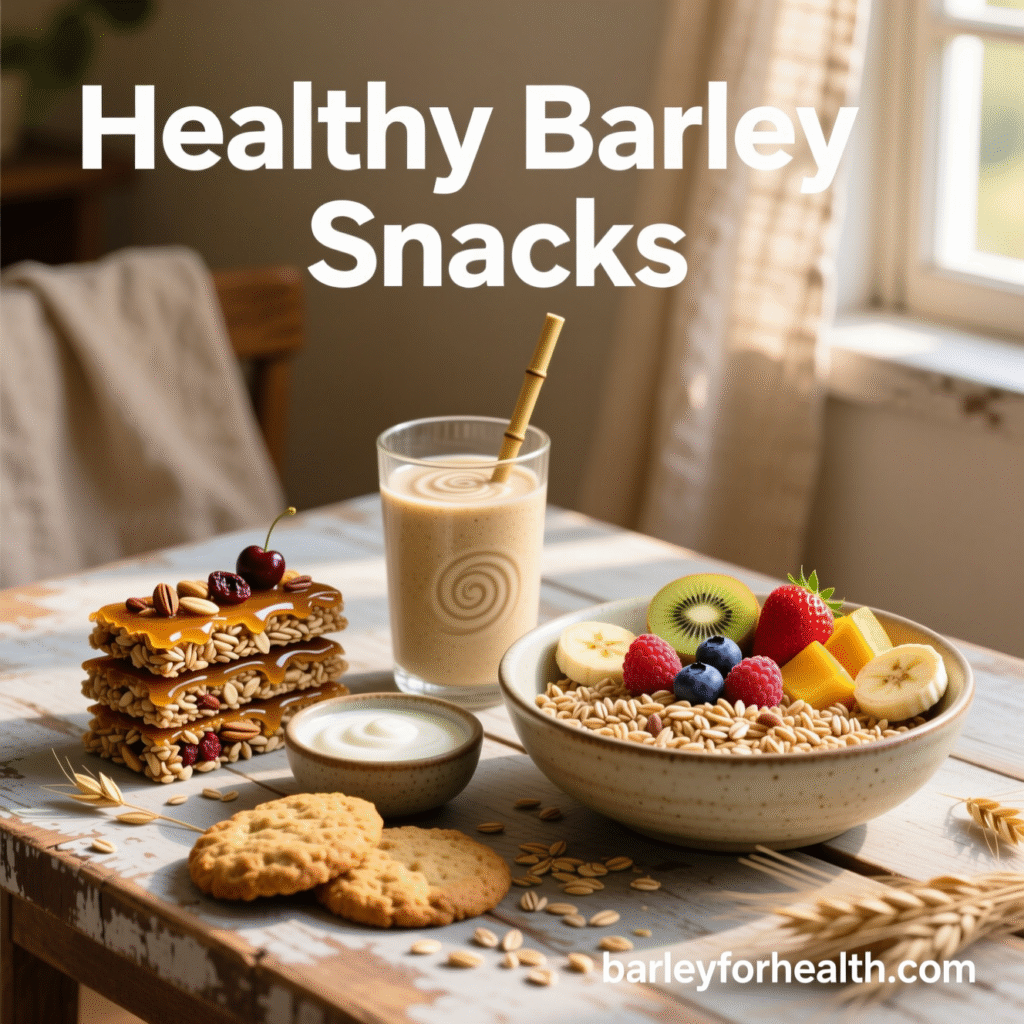
Cereal snacks are not all created equal. In a food landscape filled with sugar-heavy bars, ultra-processed bites, and quick-energy treats, only a few options truly support metabolic balance and long-term health. Among them, barley-based cereal snacks are emerging as one of the ultimate healthy choices, gaining attention from scientists, dietitians, and wellness enthusiasts alike.
Unlike most modern snacks that deliver fast calories with little nutritional value, barley cereal snacks offer a naturally superior profile. Their advantage lies in beta-glucan, the soluble fiber unique to barley that slows digestion, stabilizes blood sugar, enhances satiety, and contributes to better metabolic health.
Recent clinical studies highlight just how powerful these effects can be. Participants consuming barley-rich snacks experienced greater fullness, more stable post-meal glucose levels, and fewer energy crashes — all essential factors for healthy weight management and sustained energy throughout the day.
Far from being a passing trend, barley-based cereal snacks represent a new generation of functional foods, where flavor meets scientific evidence and convenience aligns with well-being. As research continues to uncover their benefits, one conclusion stands out: barley may redefine what a truly healthy cereal snack should be.
Cereal Snacks: Why Barley Deserves Your Attention
Barley isn’t just another whole grain — it’s a nutritional powerhouse that modern science now recognizes as one of the most promising ingredients for next-generation cereal snacks. Valued for thousands of years and increasingly studied today, barley contains a wide range of bioactive compounds, but its most remarkable component remains beta-glucan, a soluble dietary fiber concentrated in the cell walls of the grain.
When incorporated into cereal snacks, barley’s beta-glucan forms a gentle, gel-like matrix in the digestive tract. This viscosity slows down gastric emptying and the passage of nutrients through the small intestine. The result? A delayed glucose absorption, a more stable insulin response, and a longer-lasting feeling of fullness — three benefits rarely delivered by typical commercial snacks made with refined grains.
Decades of research consistently link beta-glucan to improvements in LDL cholesterol, digestion, and post-meal glycemic control. These effects make barley one of the few grains capable of transforming an ordinary snack into a functional food that actively supports metabolic and cardiovascular health.
This raises an essential question: How can these powerful physiological effects be integrated into everyday snacking? Food scientists have explored this by developing barley-based cereals, biscuits, bars, and other portable snack formats. Two pivotal studies — one examining appetite regulation and the other assessing glycemic response — reveal how even a simple barley cereal snack can deliver measurable, science-backed benefits with every bite.
For more background on barley’s nutritional compounds, read our article on Barley and Cholesterol: What the FDA Approves.
When Snacks Help You Feel Full Longer
The first study, conducted by Paola Vitaglione and colleagues at the University of Naples, examined whether a barley beta-glucan–enriched biscuit could influence appetite and energy intake. Twenty healthy adolescents participated, consuming mid-morning snacks that contained either regular wheat biscuits or biscuits made with barley flour enriched with 5.2% beta-glucan.
The results were intriguing. After eating the barley snack, participants reported a stronger feeling of fullness and a lower desire to eat compared to those who consumed the control biscuits. This effect lasted for about two hours after snacking. The researchers noted a reduction in hunger and an increase in satiety, measured through visual analog scales.
Interestingly, the barley snack did not significantly reduce the total calories consumed at lunch, but it did influence how participants perceived their appetite—especially among females, who showed a tendency toward lower overall intake. In short, while the short-term energy balance didn’t change dramatically, the feeling of satisfaction improved noticeably.
If you’re curious about how barley supports weight management, explore our article on Barley for Diabetes: Is It the Right Grain for You?.
When Snacks Help Control Blood Sugar
The second study, led by Shirin Panahi and her team at the University of Toronto and the University of Alberta, focused on another major benefit — blood sugar regulation. Researchers developed snack bars containing different doses of barley and oat beta-glucan (ranging from 1.5 to 6 grams per serving) and tested their effect on postprandial glycemia in 12 healthy adults.
Over several test sessions, participants consumed snack bars providing 50 grams of available carbohydrates, followed by blood glucose monitoring for two hours. Surprisingly, adding increasing doses of beta-glucan—up to 6 grams—did not produce additional glucose-lowering effects compared to the control bar. However, all the bars, regardless of beta-glucan content, reduced the glycemic response by an average of 25% compared to white bread.
The researchers proposed an interesting explanation: the food matrix. In solid foods like snack bars, beta-glucan’s solubility and viscosity are reduced due to interactions with fats, proteins, and other ingredients. This limited its functional impact on blood sugar. In simpler terms, the way the fiber behaves inside the product affects how it performs in your body.
Still, the study reinforces a valuable takeaway — barley snack formulations can offer glycemic benefits compared to conventional refined snacks, especially when designed with balanced macronutrients. For people looking to stabilize energy levels or reduce glucose spikes, barley-based options are a smart alternative.
To understand how barley performs across cultures and climates, check out Barley in North Africa: From Survival to Sustainability.
Appetite, Energy, and Balance: The Double Effect
Together, these studies paint a compelling picture of the barley snack as a true functional food — one that delivers measurable benefits for both appetite control and glycemic stability. Participants consuming snacks enriched with barley’s beta-glucan experienced not only greater satiety but also gentler post-meal glucose curves, reflecting a smoother metabolic response. While the degree of these effects varies with formulation, texture, and dosage, the underlying mechanism remains constant: beta-glucan’s remarkable capacity to slow gastric emptying and modulate nutrient absorption.
From a nutritional perspective, these findings hold tangible promise. Barley-based snacks may help curb cravings, sustain energy, and reduce the “sugar crash” often triggered by refined carbohydrates. This makes them particularly valuable in modern lifestyles where people seek quick yet wholesome foods that support productivity and well-being. In the long run, such subtle metabolic steadiness could contribute to better weight management, improved insulin sensitivity, and an overall healthier relationship with food.
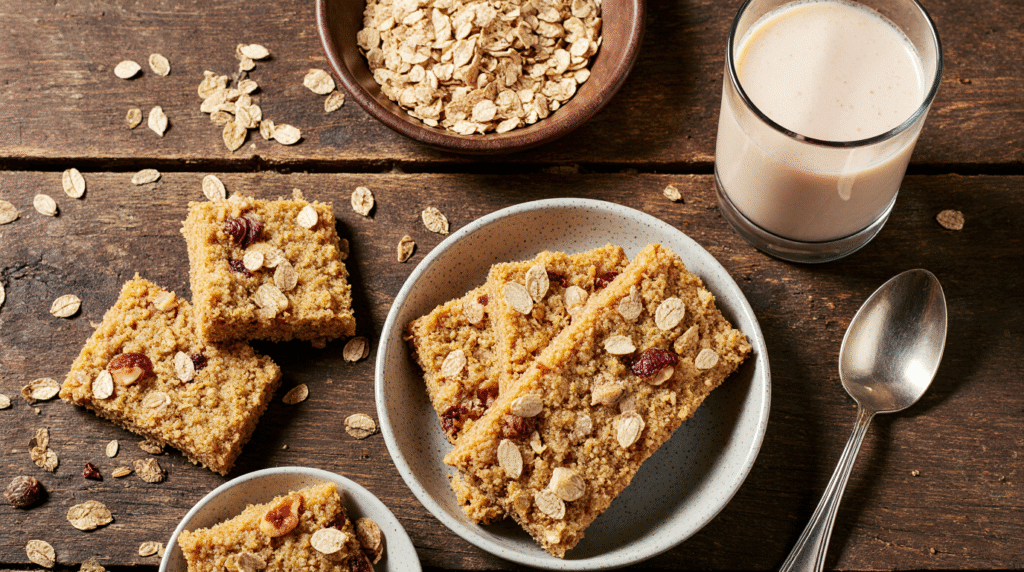
Beyond their immediate effects, barley snacks also carry broader implications for metabolic health and disease prevention. Thanks to their naturally low glycemic index and rich fiber profile, they stand out as a smart choice for individuals aiming to reduce the risk of diabetes, cardiovascular disease, or chronic inflammation. Researchers emphasize that the key lies in optimizing the food matrix — ensuring that beta-glucan maintains its viscosity and functionality, whether it’s baked into a soft biscuit, compacted into a crunchy bar, or dispersed in a ready-to-drink beverage.
In essence, the barley snack represents more than a convenient bite; it embodies the growing potential of scientifically informed foods — snacks designed not merely to please the palate, but to actively support metabolic balance.
If you’re interested in how barley can be used in traditional foods, explore Why Talbina Is the Best Healing Food for Stress & Digestion
How to Enjoy Barley Snacks in Daily Life
The growing body of evidence surrounding barley snack innovation is not just for laboratories — it’s also for the kitchen. Whether you’re a fitness enthusiast, a busy professional, or someone watching your sugar intake, integrating barley-based snacks can be both easy and satisfying.
Here are a few ideas:
- Beta-glucan biscuits – Swap your morning cookie for a barley flour version. Pair it with yogurt or fruit for a balanced snack.
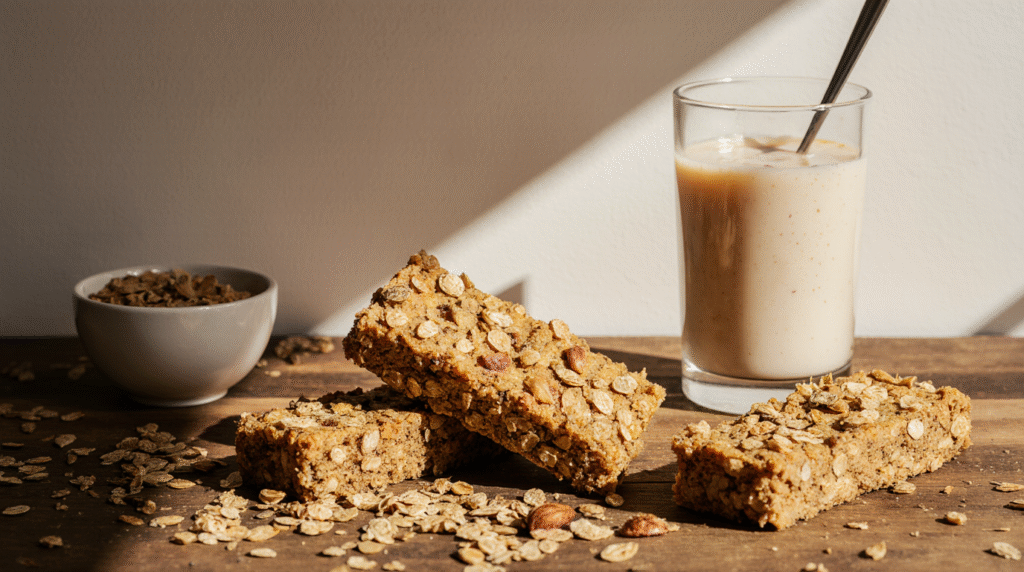
- Homemade energy bars – Combine barley flakes, honey, nuts, and dried fruit for a natural source of energy and fiber.
- Barley smoothies – Use cooked barley or barley powder in smoothies to increase viscosity and prolong satiety.
- Barley-based cereals – Choose breakfast cereals made from whole barley grains to support appetite control foods and a natural blood sugar balance.
If you’re ready to try a nourishing, satisfying version at home, visit our recipe collection on Homemade Barley Recipes.
The Takeaway: Science Meets Taste
What makes the barley snack truly remarkable is its ability to bridge science and everyday eating. It represents a rare harmony between what nutrition research proves and what people actually crave — something satisfying, convenient, and genuinely good for the body. Studies consistently confirm that barley’s beta-glucan exerts measurable effects on appetite regulation and blood glucose stability, helping the body sustain energy more evenly throughout the day.
Of course, these effects depend on how the snack is formulated — the proportion of barley flour, the processing method, and the amount of soluble fiber all matter. Yet, whether baked into crisp biscuits or shaped into soft, chewy bars, barley’s unique fiber consistently brings the promise of better satiety, smoother energy, and balanced nutrition.
In a world dominated by ultra-processed snacks that deliver a quick rush followed by a sharp crash, barley stands apart. It offers a refreshing alternative — slow, steady, and scientifically supported, designed not just to fill you up, but to nourish you deeply.
This isn’t just another fleeting “superfood” trend — it’s a revival of an ancient grain finding new purpose in modern nutrition. Behind each satisfying bite lies a story of resilience, from traditional fields to contemporary food science.
So, the next time you reach for a snack between meals, choose barley. Behind that gentle crunch is a powerful blend of tradition, innovation, and metabolic wisdom — proof that the smartest snacks don’t just taste good; they help your body thrive.
References:
- Vitaglione, P., Lumaga, R. B., Montagnese, C., Messia, M. C., Marconi, E., & Scalfi, L. (2010). Satiating Effect of a Barley Beta-Glucan–Enriched Snack. Journal of the American College of Nutrition, 29(2), 113–121.
- Panahi, S., Ezatagha, A., Jovanovski, E., Jenkins, A., Temelli, F., Vasanthan, T., & Vuksan, V. (2014). Glycemic Effect of Oat and Barley Beta-Glucan When Incorporated into a Snack Bar: A Dose Escalation Study. Journal of the American College of Nutrition, 33(1), 1–8.

