
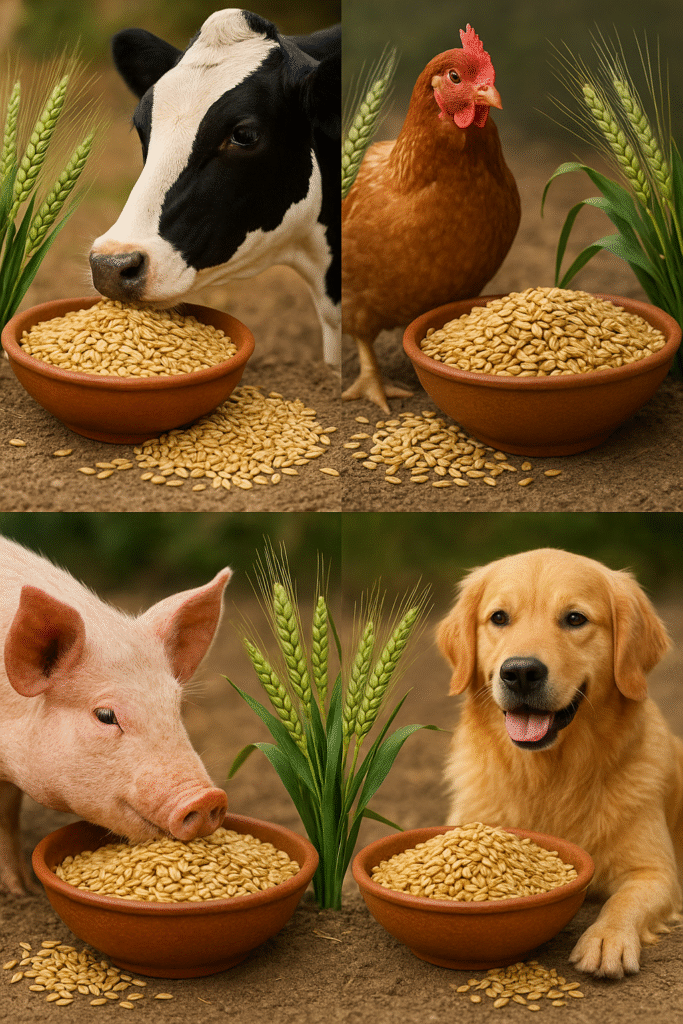
Food animals—including cattle, sheep, goats, poultry, pigs, and farmed fish—are essential to global food systems. They provide high-quality protein, dairy, eggs, and micronutrients that support millions of families worldwide. Their health, productivity, and the safety of the foods they produce depend on a central factor: their diet.
Meanwhile, companion animals, especially dogs and cats, now live closely with humans as family members. Their nutritional needs are unique, and their diet has implications not only for their wellbeing but also for public health.
Across livestock and household animals, barley stands out as a nutritious, functional, and sustainable grain that enhances digestive health, immunity, metabolic stability, and overall wellbeing.
Table of Contents
1.What Are Food Animals? A Simple Explanation
Food animals are the animals raised to provide us with everyday foods like meat, milk, eggs, and fish. They include familiar species such as cows, sheep, goats, chickens, pigs, and many farmed fish.
These animals play a major role in our lives because they help feed millions of families around the world. They provide:
- high-quality protein
- essential vitamins and minerals
- healthy fats
- food security for entire communities
Different types of food animals have different digestive systems.
For example:
- Cattle, sheep, and goats are ruminants—they digest fiber very efficiently.
- Pigs need energy-rich, easily digestible grains.
- Chickens and turkeys require highly digestible feed to grow properly.
- Farmed fish depend on precise diets to stay healthy.
Understanding how these animals work is important because the quality of the food they produce begins with the quality of the food they eat.
👉 Internal link suggestion:
Add link to your article on barley as a staple food.
Barley as a Staple Food: 10,000 Years of Nutritional Magic
2. Why Animal Diet Matters: Health Starts in the Gut
Just like humans, animals stay healthy when they eat the right foods. Their diet affects almost everything about their well-being—how they grow, how strong their immune system is, how well they digest their meals, and even how much milk or meat they produce.
A good diet helps animals:
- develop a strong immune system
- fight off infections naturally
- digest their food comfortably
- maintain steady energy
- grow and produce in a healthy, balanced way
Inside every animal lives a huge community of bacteria called the gut microbiota.
When animals eat nutritious feed, this community becomes stronger and more balanced.
A healthy microbiota means:
- fewer stomach problems
- less inflammation
- better nutrient absorption
- stronger immunity
But diet isn’t just about nutrients—it’s also about safety.
Poor-quality feed can expose animals to:
- molds or toxins
- harmful bacteria
- chemical contaminants
- antibiotic residues
When animals receive clean, balanced, and digestible feed, they are healthier—and the foods we get from them are safer too.
3. When Animal Feed Becomes a Risk: The Problem With Antibiotics
In many farming systems, antibiotics are added to animal feed—not just to treat sick animals, but sometimes to prevent disease or help animals grow faster. This practice has been used for decades, especially in poultry, pigs, and large-scale farms.
While antibiotics can be helpful when used correctly, using them too often or in the wrong way creates a serious problem:
bacteria can become resistant to them.
This means the antibiotics stop working, not only for the animals but also for humans.
How does antibiotic resistance start?
When animals eat feed containing antibiotics:
- some bacteria die
- but others survive and become stronger
- these resistant bacteria multiply
- they can spread to the environment, the farm, and even to people
How resistant bacteria reach humans
Resistant bacteria can travel to people through:
- contaminated meat, milk, eggs, or fish
- handling animals or working on farms
- soil, water, and manure
- kitchen surfaces and household environments
Why this matters
These “superbugs” can cause infections that are:
- harder to treat
- longer to cure
- sometimes life-threatening
- more expensive for families and health systems
This issue is part of what experts call the One Health concept:
the idea that the health of animals, humans, and the environment is all connected.
By improving animal diets—especially with natural, fiber-rich grains like barley—we can support healthier animals and reduce the reliance on antibiotics in the first place.
4. Why Your Pet’s Diet Matters: Health, Happiness, and Safety
Dogs and cats are more than animals—they’re family.
They share our homes, our routines, and sometimes even our beds. Because we live so closely with them, what they eat can also affect our health.
That’s why feeding pets the right foods is just as important as feeding farm animals correctly.
Dogs and Cats Are Part of the Family
Pets depend entirely on us for their food.
A healthy diet helps them:
- stay energetic and happy
- avoid stomach problems
- maintain a healthy weight
- build a strong immune system
- live longer, healthier lives
But good nutrition for pets is not only about their wellbeing—it’s also about the health of the humans who live with them.

The Rise of “Natural” Pet Foods
In recent years, many pet owners have looked for more “natural” foods—recipes made from whole ingredients instead of highly processed ones.
One of the biggest trends is adding:
- whole grains
- vegetables
- gentle sources of fiber
- minimally processed ingredients
Barley fits perfectly into this trend because it’s:
- easy to digest when cooked
- gentle on the stomach
- rich in vitamins and minerals
- a good source of slow, steady energy
- helpful for pets with sensitive digestion
👉 Barley is already used in many high-quality pet foods in the US.
Raw Diets: Popular but Risky
Raw meat diets have become fashionable, but scientific studies warn that they come with significant risks.
Raw diets often contain harmful bacteria such as:
- Salmonella
- E. coli
- Campylobacter
These germs can:
- make pets sick
- be shed in their stools
- contaminate floors, hands, and surfaces
- infect people—especially children and elderly family members
So even though raw diets sound “natural”, they can create real dangers inside the home.
Pet Diets Affect Their Microbiome—and Yours
A pet’s gut is full of bacteria that help with digestion.
When their diet is healthy and balanced, this bacterial community stays stable.
When it isn’t, harmful bacteria can grow and spread.
Because pets live so close to humans, the bacteria they carry—good or bad—can influence the microbiological environment of the household.
In simple terms:
keeping your pet healthy helps keep your family healthy too.
Dogs and Cats Have Very Different Needs
It’s important to remember:
Dogs are omnivores
They digest carbohydrates, including barley, extremely well.
Barley gives them:
- smooth digestion
- good stool consistency
- steady energy
- help with weight control
- better microbiota balance
Cats are obligate carnivores
They must eat mostly protein.
They can consume small, well-cooked amounts of barley, but it should never be a main ingredient.
Better Food for Better Health: Ruminants, Poultry, Dogs and Cats
Macronutrient needs differ between species
- Dogs: ~30% ME from protein, tolerate grains well
- Cats: ~52% ME from protein
- Ruminants: rely on fiber; benefit from moderate barley starch
- Poultry: require high-energy, digestible grains
Whole ingredients improve digestibility and nutrient density
Whole grains—including barley—improve:
- stool quality
- satiety
- micronutrient absorption
- gut fermentation
Importance of digestibility, fibers, and safety
High digestibility reduces:
- inflammation
- pathogenic toxins
- feed waste
- costs
5. The Role of Barley in Food Animal and Pet Nutrition
Barley is one of the most valuable grains for both food animals and pets.
It’s gentle on the stomach, naturally rich in fiber, packed with important nutrients, and provides slow, steady energy without causing sugar spikes.
Because of this unique combination, barley supports healthier food animals, improves digestion, and even helps farmers reduce their reliance on antibiotics. It’s a grain that works for cows, sheep, goats, poultry, dogs—and even in fresh, green form for hydroponic fodder systems.
Why Barley Is Great for Farm Animals
Barley isn’t just another feed grain—it offers real, practical benefits on the farm:
1. It keeps the stomach and gut healthy
Animals digest barley smoothly, which helps prevent common stomach problems and supports a more balanced gut environment.
2. It helps cows and sheep digest better
Barley ferments more gently in the rumen compared to fast-fermenting grains like wheat or corn.
This means:
- less bloating
- fewer digestive upsets
- more stable energy over the day
3. It reduces digestive problems
Some grains ferment too quickly and can cause acidosis or discomfort.
Barley’s moderate starch is easier on the rumen and intestines.
4. It improves milk quality
Farmers often notice:
- better butterfat levels
- improved milk composition
- steadier milk production
5. It gives animals steady, long-lasting energy
Barley releases energy slowly, helping animals stay active and productive without sugar crashes.
6. It helps reduce the need for antibiotics
When animals digest better and their stomach stays healthy, they are:
- less stressed
- less prone to infections
- more resistant to disease
This means fewer digestive disorders and less routine antibiotic use—great for animal health and public health.
Why Barley Works So Well for Dogs
Dogs digest barley extremely well, especially when it’s cooked or flaked. It fits perfectly into the modern trend of natural and whole-ingredient pet foods.
Smooth, comfortable digestion
Barley is gentle on the stomach and ideal for dogs with sensitive digestion.
Supports healthy weight
The natural fiber in barley helps dogs feel full without overeating, making it an excellent ingredient for weight-control diets.
Keeps stools firm and consistent
It improves stool quality—something dog owners appreciate every day.
Provides steady, slow-release energy
Great for active dogs or those who need energy throughout the day.
Helps balance the gut microbiome
Good fibers = good bacteria = better immunity.
Many premium dog foods already use barley as one of their main ingredients for these exact reasons.
What About Cats?
Cats are obligate carnivores, but small amounts of cooked barley:
- add healthy fiber
- improve stool quality
- support gut balance
Barley should not be a main ingredient in cat food, but it can safely complement a meat-based diet.
Whole Barley vs. Refined Grains
Whole barley contains:
- natural vitamins (B vitamins, especially)
- important minerals like magnesium and selenium
- powerful antioxidants
- both soluble and insoluble fiber
- phytonutrients that support overall health
Refined grains lose most of these nutrients during processing.
That’s why whole barley is increasingly used in “natural” and “holistic” pet foods and in healthier livestock diets.
Hydroponic Barley: A Fresh Superfood for Livestock
Hydroponic barley is barley grown indoors, without soil, using only water and light.
In just 6 to 8 days, it becomes a thick, bright-green mat of sprouts and roots—like a living carpet of fresh nutrition.
🌟 Why farmers love hydroponic barley:
- Extremely easy to digest
Animals absorb more nutrients with less effort. - Packed with vitamins and enzymes
More than dry grain, hydroponic barley contains natural enzymes that support digestion and immunity. - Improves milk and meat quality
Many farmers report:- shinier coats
- better fertility
- improved milk production
- higher-quality meat
- Reduces dependence on industrial feed
Instead of relying only on purchased feed, farmers can grow fresh fodder at home—even with limited land. - Perfect for dry climates
Hydroponic systems use up to 90% less water, making them ideal for regions with water scarcity. - Grows year-round
Rain or shine, the system produces the same high-quality fodder every week.
6. Better Food for Better Health: How Diet Shapes Animal Wellbeing
Healthy animals don’t happen by accident—good nutrition is the foundation of their wellbeing. Whether we’re talking about cows, chickens, pigs, dogs, or cats, the right diet helps animals grow properly, stay active, resist disease, and live longer, healthier lives.
Just like humans, animals feel and perform better when they eat food that matches their natural needs.
Different Animals, Different Needs
Every species digests food differently.
Understanding these differences helps farmers and pet owners choose the best ingredients.
Ruminants (cows, sheep, goats)
They are designed to digest fibrous plants, so they thrive on grains like barley that ferment gently and support stable rumen function.
Barley helps them:
- avoid digestive upsets
- maintain a healthy rumen microbiome
- produce better-quality milk
- convert feed into energy more efficiently
Poultry (chickens, turkeys)
Chickens need highly digestible energy to grow and lay eggs.
Cooked or ground barley provides steady energy and contributes to better feather and gut health.
Monogastrics (pigs)
Pigs benefit from barley because it offers:
- smooth digestion
- essential minerals
- slow-release energy
- improved gut balance
It’s especially helpful in reducing digestive stress during weaning.
Companion animals (dogs and cats)
Dogs digest cooked barley very well and benefit from its fiber.
Cats, although carnivores, can handle small amounts for digestive support.
The Power of Whole Ingredients
Animals—just like humans—do better when their food is made from whole, minimally processed ingredients.
Barley is a perfect example of a whole ingredient that brings natural nutrition to every bowl or feed trough. Whole barley contains:
- vitamins
- minerals
- antioxidants
- high-quality fibers
- gentle, steady energy
These nutrients help animals:
- stay healthier
- feel more active
- fight infections naturally
- maintain a balanced weight
In contrast, refined grains lose most of their nutrients during processing and often act like “empty calories.”
🌟 Why This Matters
Feeding animals well is not just about improving their health.
It also leads to:
- safer food for humans
- lower veterinary costs
- better animal welfare
- reduced need for antibiotics
- more sustainable farming
- longer, healthier lives for pets
High-quality diets are the foundation of healthy animals and healthy households—and barley plays a central role in this balance.
Conclusion: When Animals Eat Better, Everyone Wins
Whether we’re talking about food animals on a farm or dogs curled up on the sofa, one thing is true:
good nutrition creates healthier animals, safer households, and a better food system for everyone.
When animals eat balanced, digestible, and natural ingredients, they:
- grow and develop more smoothly
- have fewer digestive problems
- build stronger immune systems
- produce better-quality milk, meat, and eggs
- require fewer antibiotics
- live healthier, happier lives
Better feed is also better for humans.
It means:
- safer food on our plates
- fewer antibiotic-resistant bacteria
- cleaner environments
- more sustainable farming practices
Why Barley Makes a Real Difference
Barley stands out among grains because it brings together everything animals need for good health:
- gentle digestion
- natural fibers
- steady energy
- essential vitamins and minerals
- antioxidant protection
- support for the gut and immune system
And for farmers and pet owners, barley offers something just as important:
- reliability
- safety
- sustainability
- versatility (grain, cooked barley, hydroponic fodder)
From livestock feed to dog food to green hydroponic mats, barley has a role in all kinds of diets—and it consistently improves the health and wellbeing of the animals we depend on.
A Better Future Through Better Nutrition
Improving the diets of food animals is one of the simplest and most effective ways to build a healthier world. When food animals eat better, they stay healthier, families benefit from safer products, food systems become stronger, and the pressure on the environment decreases.
Barley is not just a healthy grain—
it’s a powerful tool for raising healthier food animals and creating a better, safer, and more sustainable future for everyone.e.
FAQ about food animals
Why is barley a good grain for food animals?
Barley is gentle on the stomach, rich in natural fibers, and provides slow, steady energy. It helps improve digestion, supports gut health, and reduces digestive problems in cows, sheep, goats, pigs, and poultry.
Can dogs digest barley well?
Yes. Dogs digest cooked barley very well. It supports healthy digestion, helps control weight, keeps stools consistent, and provides low-glycemic energy.
Is barley safe for cats?
Cats are carnivores, so barley should be used in small amounts. When cooked and included in low proportions, it can improve stool quality and support gut balance.
How does barley help reduce antibiotic use in animals?
Barley supports a healthier gut, which reduces digestive issues—the most common reason animals are given antibiotics. Better digestion leads to fewer infections, meaning less antibiotic use and lower antimicrobial resistance.
References
Marshall, B. M., & Levy, S. B. (2011).
Food animals and antimicrobials: impacts on human health. Clinical Microbiology Reviews, 24(4), 718–733.
Briggs, C. A. (1978).
Barley: an important grain for human and animal food.
Journal of the American Oil Chemists’ Society, 55, 477–482.
Buff, P. R., Carter, R. A., Bauer, J. E., et al. (2014).
Natural pet food: A review of natural diets and whole ingredients for dogs and cats.
Journal of Animal Science, 92(9), 3782–3791.
Davies, R. H., Lawton, S., & Green, M. (2019).
Raw diets for dogs and cats: A review of the science and practical guidance.
Journal of Small Animal Practice, 60(2), 80–89.

