

Table of Contents
In the pursuit of a healthy weight, we often focus on cutting calories or eliminating carbohydrates. Yet decades of research now reveal a more powerful truth: the quality of the carbs you eat matters far more than the quantity.
Choosing low glycemic foods to lose weight isn’t a trend — it’s a strategy grounded in human physiology.
When you eat foods that digest slowly, your blood sugar rises gradually, your insulin levels stay stable, and your body burns fat more efficiently.
This is the foundation of the low glycemic index (GI) approach a nutritional principle supported by numerous clinical studies, including the GLYNDIET and DIOGENES trials.
Let’s explore how these foods work, which ones truly make a difference, and why barley stands out as one of the best grains for weight loss.
Understanding Low Glycemic Foods
The glycemic index ranks carbohydrate-rich foods based on how quickly they raise blood glucose compared to pure glucose (score = 100).
Low-GI foods (≤ 55) release sugar slowly, producing a mild, sustained rise in blood sugar rather than a sharp spike.
This slow release does three key things:
1️⃣ Keeps energy levels stable throughout the day.
2️⃣ Reduces hunger by maintaining satiety hormones like GLP-1 and PYY.
3️⃣ Minimizes fat storage by lowering insulin peaks.
Typical low glycemic foods include whole grains (barley, oats, quinoa), legumes (lentils, beans, chickpeas), fruits (apples, pears, berries), and vegetables (broccoli, carrots, leafy greens).
In contrast, refined carbohydrates — white bread, sweetened cereals, and pastries — digest rapidly, leading to blood sugar crashes, cravings, and long-term weight gain.
Scientific Evidence: Low GI Diets and Weight Loss
1️⃣ Low Glycemic Diets Improve Fat Loss and Insulin Sensitivity
The GLYNDIET study (Juanola-Falgarona et al., 2014) followed 122 overweight adults for six months.
Participants were randomly assigned to one of three diets:
- a low-GI, moderate-carbohydrate plan,
- a high-GI plan, and
- a traditional low-fat diet.
At the end of the trial, the low-GI group achieved greater weight loss and lower fasting insulin than the low-fat group, even though total calories were identical.
The improvement in HOMA-IR, an index of insulin resistance, proved that how your carbs behave matters more than how many you eat.
This aligns with growing evidence linking glycemic index and weight loss through improved insulin sensitivity and reduced inflammation.
2️⃣ Low GI Foods Help Prevent Weight Regain
The DIOGENES trial (Larsen et al., 2010) — one of Europe’s largest nutrition studies — confirmed these findings in over 770 adults.
After initial weight loss, participants who switched to a low glycemic load, high-protein diet maintained their results far better than those on a high-GI plan.
📊 Weight regain averaged 1 kg less in the low-GI group, and participants reported higher satisfaction and adherence.
Even small GI reductions of 5 points produced meaningful metabolic benefits.
This shows that choosing low glycemic foods to lose weight supports sustainability, not restriction — it’s about eating smarter, not eating less.
3️⃣ Barley: The Smartest Carb You’re Not Eating
Among all grains, barley consistently ranks among the lowest on the glycemic index (28–35).
This ancient cereal owes its metabolic benefits to its β-glucan, a soluble fiber that thickens intestinal contents, slowing carbohydrate absorption.
In human trials, barley consumption has been shown to:
- reduce post-meal glucose spikes and insulin surges,
- increase satiety hormones (GLP-1 and PYY),
- improve gut microbiota composition, and
- lower LDL cholesterol and triglycerides.
These mechanisms make barley one of the best grains for weight loss — especially for individuals managing insulin resistance or metabolic syndrome.
💡 Read next: Best Cereal for Weight Loss: Why Barley Outperforms the Rest
How Low-GI Foods Support Metabolic Health
Beyond fat loss, low glycemic diets improve several key aspects of metabolism:
| Mechanism | Physiological Effect |
|---|---|
| 🔽 Reduced glycemic load | Less insulin secretion and lower fat storage |
| 🔼 Improved insulin sensitivity | Better glucose uptake by muscle cells |
| 🔼 Enhanced satiety hormones (GLP-1, leptin) | Longer fullness, fewer cravings |
| 🔽 Inflammation markers (CRP, IL-6) | Lower chronic disease risk |
| 🔼 Fat oxidation efficiency | More effective use of stored energy |
In the GLYNDIET study, the low-GI group also showed reduced leptin and C-reactive protein, markers of fat accumulation and systemic inflammation.
These results reinforce the idea that glycemic load and metabolism are intimately connected — when your blood sugar is stable, your metabolism runs smoothly.
Top Low Glycemic Foods to Include Daily
| Category | Food Examples | GI Range | Key Benefit |
|---|---|---|---|
| Grains | Barley, oats, quinoa, | 28–55 | Long-lasting energy, improved gut health |
| Legumes | Lentils, chickpeas, black beans | 28–38 | High protein, stabilizes blood sugar |
| Fruits | Apples, pears, berries | 30–50 | Natural antioxidants, low GI |
| Vegetables | Broccoli, spinach, sweet potato | <40 | Fiber and micronutrients |
| Nuts & Seeds | Almonds, chia, flaxseeds | <30 | Healthy fats, support satiety |
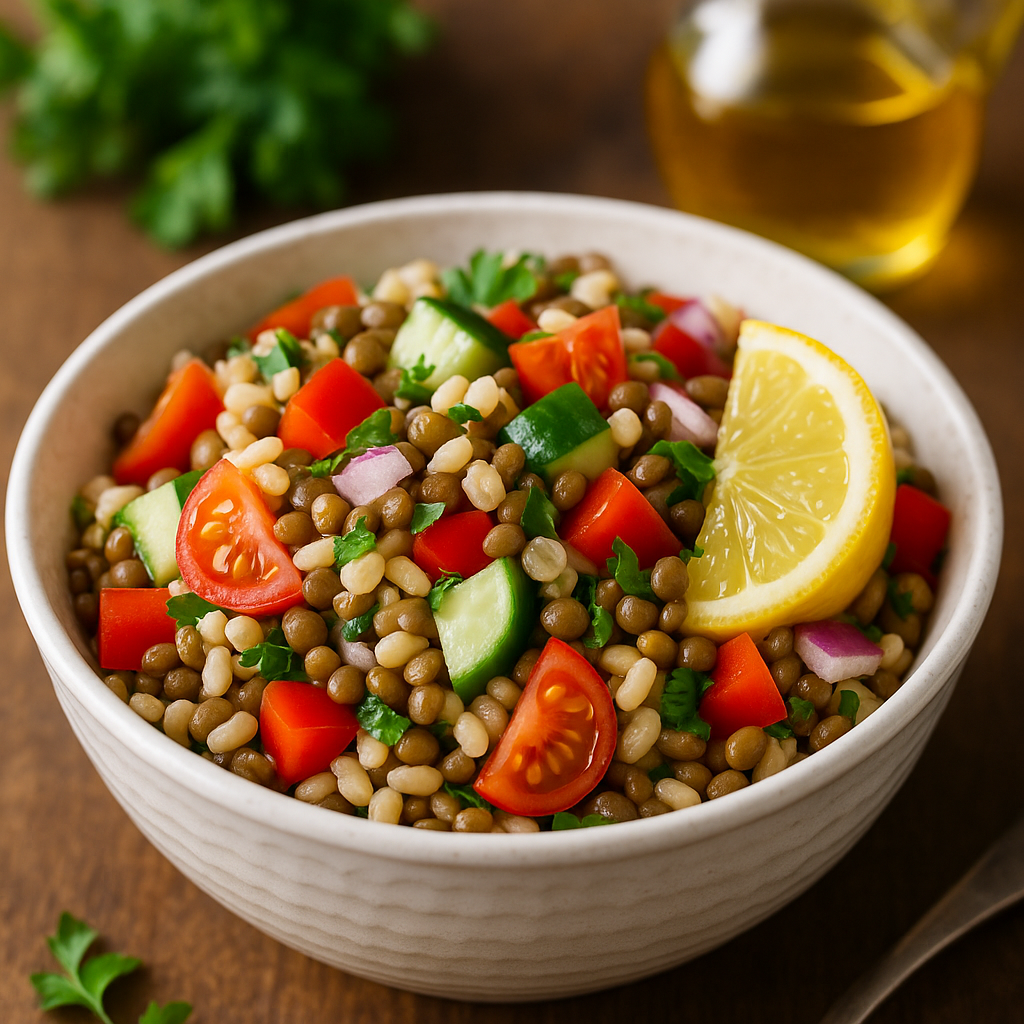
Pairing these foods with healthy fats like olive oil, nuts, or avocado and lean proteins such as fish, eggs, or yogurt further reduces the meal’s overall glycemic impact.
This combination slows digestion, promotes satiety, and helps maintain a steady release of glucose into the bloodstream.
It also enhances the absorption of fat-soluble vitamins (A, D, E, and K) and supports hormonal balance—two often-overlooked factors that contribute to sustainable weight management and metabolic health.
Low GI vs. Low Carb: What Works Best?
Low-carb diets often deliver quick initial results, but they’re difficult to maintain and can reduce important nutrients such as fiber, B vitamins, and minerals. Most of the early weight loss they produce comes from water and glycogen rather than fat, and prolonged restriction may also disrupt gut balance and metabolic flexibility.
In contrast, low-glycemic-index (low-GI) diets offer a more balanced, sustainable approach. They include whole grains, fruits, and legumes that release carbohydrates slowly, helping to stabilize blood sugar and insulin levels while maintaining energy and satiety.
A review in the International Journal of Obesity (Sloth et al., 2008) found that moderate-carbohydrate, low-GI diets achieved similar weight loss to low-carb plans but with better improvements in cholesterol, triglycerides, and glucose control. Participants also maintained better adherence thanks to steady energy and reduced cravings.
Overall, the evidence shows that carbohydrate quality matters more than quantity. Choosing low glycemic foods to lose weight—such as barley, oats, and lentils—supports long-term metabolic health without deprivation.
💡 Related reading:
Conclusion: Eat Smart, Not Less
Choosing low glycemic foods to lose weight is one of the most evidence-based and sustainable approaches to long-term health. Instead of cutting entire food groups, this method focuses on balance — selecting carbohydrates that work with your metabolism rather than against it.
By prioritizing slow carbs like barley, lentils, and oats, you enhance insulin sensitivity, prolong satiety, and naturally reduce calorie intake — all while maintaining steady energy and avoiding the fatigue and cravings often associated with restrictive diets.
Among these foods, barley deserves special recognition. As an ancient grain rediscovered by modern science, it offers a unique combination of β-glucan fiber, antioxidants, and essential minerals that support healthy blood sugar, heart function, and gut balance.
More than a staple grain, barley represents a bridge between ancestral nutrition and contemporary health goals — a simple, natural food with powerful effects on weight management and overall well-being.
👉 Continue reading our nutrition insights at Barley for Health.
FAQ — Low Glycemic Foods to Lose Weight
1. What are lG, and how do they help with weight loss?
Low glycemic foods release glucose slowly into the bloodstream, preventing blood sugar spikes and reducing insulin surges.
This leads to fewer cravings, better satiety, and improved fat metabolism — all essential for sustainable weight loss.
2. Can lG foods help manage diabetes as well?
Yes. Numerous clinical studies, including the GLYNDIET and DIOGENES trials, show that low-GI diets improve insulin sensitivity and reduce blood sugar fluctuations.
Barley’s β-glucan has a direct hypoglycemic effect, lowering post-meal glucose in diabetics.
3. How does barley compare to other grains for weight loss?
Barley has a lower glycemic index (28–35) than oats or brown rice and is richer in soluble fiber.
This means it digests more slowly, leading to better insulin control, prolonged satiety, and reduced fat storage — making it one of the best grains for weight loss.
📚 Scientific References
1️⃣ Juanola-Falgarona M et al. Effect of the Glycemic Index of the Diet on Weight Loss, Satiety, and Inflammation: A Randomized Controlled Trial (GLYNDIET Study). Am J Clin Nutr. 2014; 100(1): 27–35.
2️⃣ Larsen TM et al. Diets with High or Low Protein Content and Glycemic Index for Weight-Loss Maintenance (DIOGENES Study). N Engl J Med. 2010; 363: 2102–13.
3️⃣ Ammna Azam et al. Hypoglycemic Effect of Barley (Hordeum vulgare L.) and Its Mechanism of Action in Humans. Int J Mol Sci. 2008; 9(3): 386–397.
4️⃣ Sloth B et al. Dietary Glycemic Index and Glycemic Load in Relation to Weight Change and Metabolic Risk Factors. Int J Obes. 2008; 32: 1736–1743.

