
Table of Contents
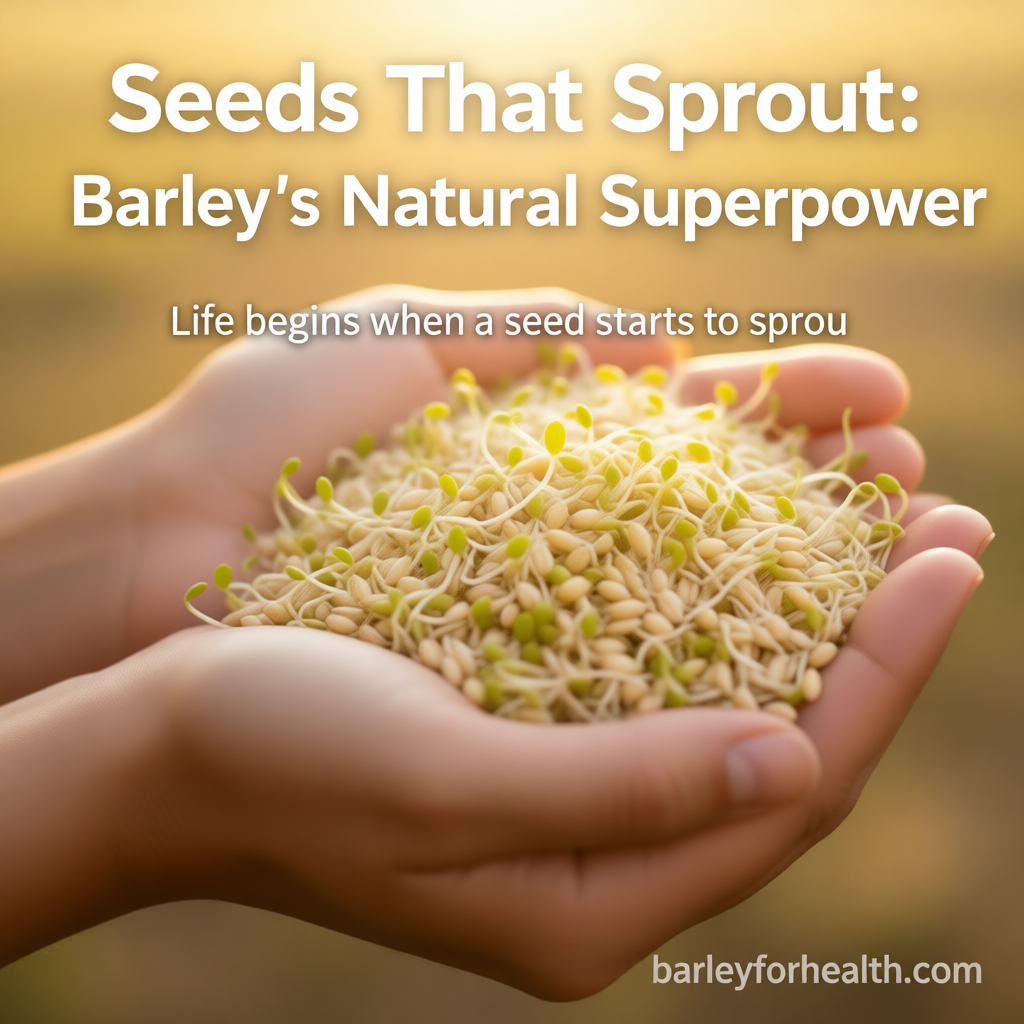
When a seed begins to sprout, it turns from a dormant grain into a living food — rich in enzymes, antioxidants, and nutrients that nourish the body naturally. Among all seeds that sprout, barley stands out as one of the most transformative.
This ancient cereal, long valued for its resilience and versatility, reveals even greater potential when germinated. Through sprouting, barley becomes a functional ingredient that promotes digestive health, antioxidant protection, and metabolic balance.
What Happens When Barley Sprouts
Sprouting is a biochemical awakening. As soon as the barley grain absorbs water, its enzymes — amylase, lipase, and protease — become active. These enzymes break down stored starches, fats, and proteins, transforming the seed into an easily digestible food rich in simple sugars, amino acids, and vitamins.
According to a 2020 study published in Foods, barley germination significantly increases its phenolic content and antioxidant capacity. The total phenolic compounds — including ferulic, caffeic, and p-coumaric acids — rise by up to 50% after 72 hours of germination.
At the same time, flavonoids and chlorophylls accumulate, boosting the ability of sprouted barley to neutralize free radicals and protect against oxidative stress.
The research also found that the DPPH and ABTS antioxidant activities increased sharply during the germination process, showing that the sprouted grain acts as a natural antioxidant booster. This effect makes barley sprouts particularly beneficial for heart and cellular health.
A second study, published in the International Journal of Food Science in 2023, confirmed that sprouting improves the nutritional and functional profile of barley flour. The germinated flour showed:
- Higher protein bioavailability,
- Increased total phenolic content,
- Greater antioxidant activity, and
- Improved in vitro digestibility.
Together, these results demonstrate that barley is one of the most effective and accessible seeds that sprout to enhance both nutrition and functionality.
Health and Functional Benefits
Sprouted barley is more than just a grain — it’s a bioactive food. Germination triggers the synthesis of health-promoting compounds that work synergistically to support the body’s metabolism.
| Health Benefit | Scientific Basis |
|---|---|
| Antioxidant defense | Elevated levels of phenolic acids and flavonoids strengthen resistance to oxidative stress (Foods, 2020). |
| Improved digestion | Active enzymes pre-digest starch and proteins, easing absorption and reducing bloating. |
| Lower glycemic response | Structural starch changes slow glucose release, improving blood sugar stability. |
| Cardiometabolic protection | β-glucans and polyphenols help regulate cholesterol and inflammation. |
| Relaxation and mental balance | Increase in GABA (γ-aminobutyric acid) during sprouting supports relaxation and stress management. |
Sprouted barley therefore functions as a low-glycemic, antioxidant-rich food, ideal for maintaining steady energy and supporting weight management.
From Sprouts to Flour: Extending the Benefits
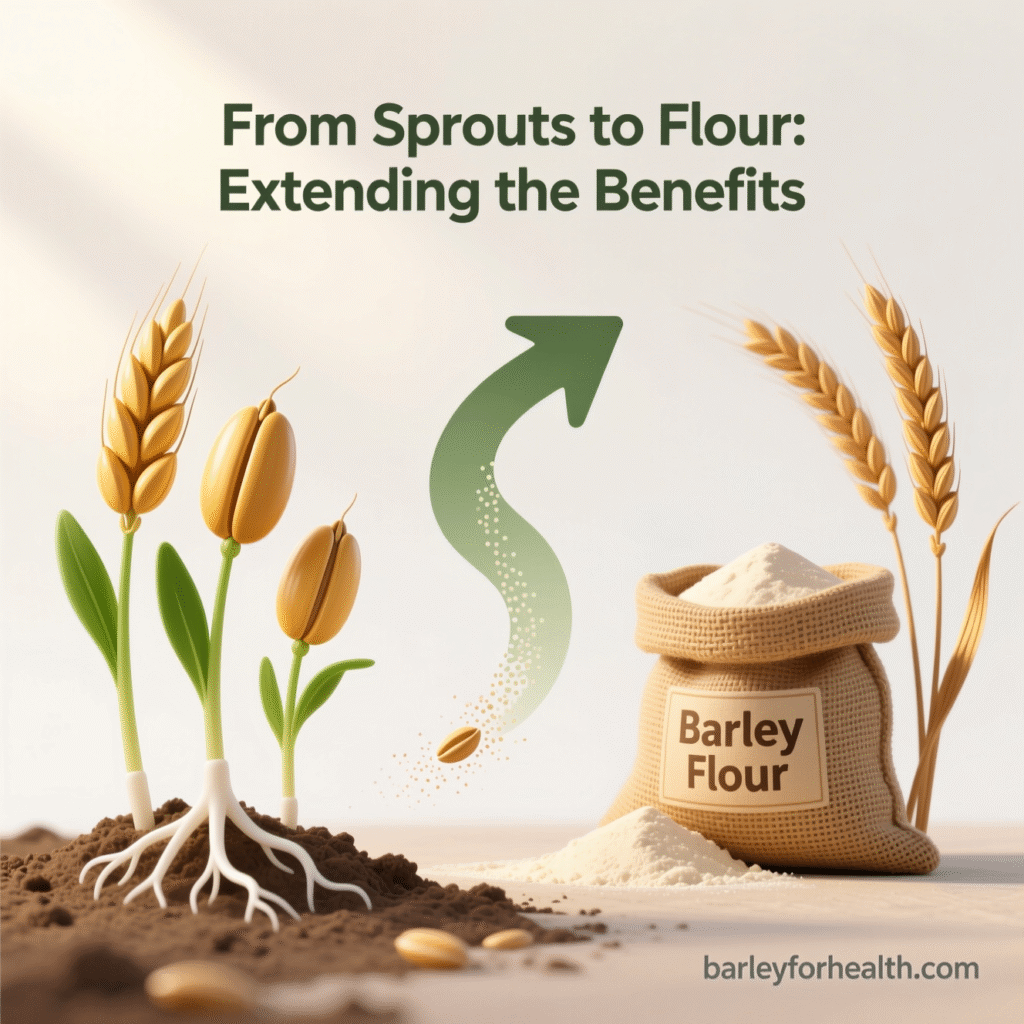
Fresh barley sprouts can be consumed directly, but drying them offers a way to extend their shelf life and broaden their uses.
After germination (usually 48–72 hours), the sprouts can be spread on a tray and dried at 80 °C (176 °F) until fully desiccated. This moderate drying temperature preserves most of the phenolic compounds and enzymes while preventing spoilage.
Once dried, the sprouts can be ground into fine flour.
This sprouted barley flour retains the benefits of germination high antioxidant capacity, enhanced digestibility, and a subtle malty flavor making it a perfect addition to
- Whole-grain breads and cookies,
- Smoothies and shakes,
- Soups, porridges, and breakfast cereals.
Sprouted barley flour is especially valued for its role in functional and low-GI foods, bringing natural sweetness, fiber, and vitality to homemade recipes.
Discover why hull-less barley varieties are ideal for sprouting and milling into functional flours: Hulless Barley: A New Era for Sustainable Cereal Use
How to Sprout Barley at Home
Sprouting barley is simple and requires only three days, a handful of grains, and basic care.
Below is a step-by-step guide you can safely follow at home:
How to Sprout Barley at Home — Step by Step
Sprouting barley at home is simple, quick, and incredibly rewarding. Follow these easy steps to turn dry grains into living, nutrient-packed food that you can even dry and mill into flour for extended use.
Step 1 — Rinse and Sanitize
Rinse the barley several times with clean water. Soak in a mild vinegar solution (1 tbsp per cup of water) for 10 minutes to remove surface bacteria, then rinse thoroughly.
💧 Step 2 — Soak
Place 1 cup of whole barley grains in a bowl or jar and cover with 3–4 times their volume in water. Let them soak for 8–10 hours at room temperature (20–25 °C).
🌿 Step 3 — Drain and Rest
Drain completely and spread the grains evenly in your sprouting jar or tray. Keep them in a ventilated, dimly lit place. Avoid stagnant water to prevent mold.
💦 Step 4 — Rinse Twice Daily
Rinse and drain your grains 2–3 times a day with lukewarm water. Maintain moisture without waterlogging. After 48–72 hours, small white shoots will appear — your barley is sprouting!
☀️ Step 5 — Observe and Harvest
Your sprouts are ready when the white rootlets reach 1–2 cm. Rinse once more and enjoy them raw in salads or smoothies. Harvest before the shoots turn green to preserve texture and sweetness.
❄️ Step 6 — Store Fresh Sprouts
Keep your barley sprouts in an open container in the fridge for up to 3 days. Add them to soups, salads, or smoothies for a fiber- and enzyme-rich boost.
🔥 Step 7 — Dry and Grind (Optional)
To extend their shelf life, spread the sprouted grains on a baking tray and dry them at 80 °C (176 °F) until fully desiccated. Once cooled, grind them into sprouted barley flour. This nutrient-rich flour can be used in baking, soups, or smoothies, combining the benefits of sprouting with the versatility of whole-grain flour.
💡 Tip: For best results, use hull-less barley (naked barley) — it sprouts faster and dries evenly without losing its delicate flavor.
Sprouting and Sustainability
Sprouting is one of the simplest, most sustainable forms of food transformation.
It requires no soil, minimal water, and produces zero waste, turning ordinary grains into nutrient-dense, living foods.
By sprouting barley at home, you promote a circular and local food approach, making functional nutrition accessible, affordable, and environmentally responsible.
Understand how barley contributes to sustainable food systems and local resilience: Barley in North Africa: From History to Future Opportunities
Conclusion
Among all seeds that sprout, barley is nature’s perfect model of transformation.
Within just three days, it shifts from a simple grain into a bioactive food loaded with antioxidants, enzymes, and fiber — a living ingredient for energy, balance, and health.
Whether enjoyed fresh or milled into flour, sprouted barley reconnects us with the essence of nutrition: life growing from life.
Find out how barley compares with other cereals in promoting long-term metabolic health; Best Cereal for Weight Loss: Why Barley Outperforms the Rest
FAQ – About sprouted Barley
1. What are barley sprouts?
Barley sprouts are germinated barley grains that have just begun to grow. In this early stage, enzymes activate and transform the grain into a living food rich in vitamins, antioxidants, and amino acids — one of the most beneficial seeds that sprout for health.
2. Is sprouted barley gluten-free?
No — barley naturally contains gluten. Even after sprouting, barley sprouts and sprouted barley flour are not suitable for people with celiac disease or gluten intolerance.
3. Why is barley considered one of the best seeds that sprout?
Barley combines ease of sprouting, high β-glucan content, and remarkable antioxidant activity. Studies show that germinated barley improves metabolic health, supports gut balance, and provides natural energy — making it one of nature’s most functional grains.
References
Aborus, N. E., Ćanadanović-Brunet, J., Ćetković, G., Tumbas Šaponjac, V., Vulić, J., & Ilić, N. (2017). Powdered barley sprouts: composition, functionality and polyphenol digestibility. International Journal of Food Science and Technology, 52(1), 231–238.
Rico, D., Peñas, E., García, M. del C., Martínez-Villaluenga, C., Rai, D. K., Birsan, R. I., Frías, J., & Martín-Diana, A. B. (2020). Sprouted barley flour as a nutritious and functional ingredient. Foods, 9(3), 296.
https://doi.org/10.3390/foods9030296

